Let's Talk

From idea to production
We check whether the idea is feasible, build a prototype, turn it into a working device and support it after launch. One team carries it the whole way.
Turnkey hardware & device development
We build smart devices and connected hardware end to end, from the first prototype to units working in the field. Firmware, on-device AI, cloud, dashboards and mobile apps come from one team, so you get a finished product, not parts from different vendors.

One team, one product
A device usually passes through several vendors: one designs the board, another writes the firmware, a third trains the AI, a fourth builds the app. Most of the time is lost at the handoffs between them. We cover the whole chain ourselves, or take exactly the link you are missing.
We check whether the idea is feasible, build a prototype, turn it into a working device and support it after launch. One team carries it the whole way.
Come with an idea on paper, a prototype that so far only works on a desk, or devices you want to make smarter. We pick the project up where it is today.
When one team designs the device, firmware, AI and app, the parts fit from the start. There is no final month when it turns out they do not work together.
A connected device is never just code or just a board. Electronics, firmware, computer vision, connectivity, cloud and apps all have to work as one, and most delays happen where one vendor hands the work to the next.
Our hardware development services are built around the problems we have actually solved in real projects: software that is ready before the hardware, AI that keeps its accuracy in the field, and fleets of devices that can be monitored and updated remotely.
The problem
How we solve it
One team covers electronics, firmware, on-device AI, cloud and apps, so nothing gets lost at the handoffs.
The problem
How we solve it
We test the software on a model of the device, so integration is done when the first boards arrive.
The problem
How we solve it
Devices collect new examples, the system labels them, retrains the model and rolls it out to the fleet.
The problem
How we solve it
A fleet dashboard shows the status and versions of every unit and updates them remotely.
The problem
How we solve it
Risky ideas are proven on a test bench first, then turned into a reliable, field-ready device.
The problem
How we solve it
We integrate controllers, locks, printers and cameras, even ones never meant to be controlled from outside.
Six areas that every smart device is built from. You can order them separately, but they work best together.
In most projects these areas overlap: a device with a camera needs computer vision, embedded software and fleet management at the same time. That is why we build them as one product.
Software that makes mechanics move precisely and on time: it drives motors, points a platform using a camera and reacts to limit switches. We prove the logic on a test bench first, before production hardware is bought.
We teach cameras to understand what they see: detect and tell objects apart, track events in defined zones of the frame and follow objects in motion. Recognition runs on the device itself, and we choose the camera and optics by calculation for the specific task.
Once you run many devices, you need one place that shows each of them: is it online, which firmware and model version it runs, is everything fine. From there, each device is updated remotely, without a site visit.
We connect controllers, sensors, cameras, locks, printers and the server so that everything works reliably. That includes equipment without proper documentation and devices their maker never meant to be controlled from outside.
Devices that talk to a phone over Bluetooth or to a server over the internet, plus the mobile apps for them. A device can be opened to partners, who control it from their own apps while the device itself stays closed and secure.
AI that gets better while it works. Devices collect new examples, the system labels them automatically and retrains the model. The new version then goes out to devices automatically or when you release it from the admin panel.
Real projects
Client names, their industries and hardware models are left out on purpose, because we do not disclose who we work for. We changed the details, not the substance: everything described as done was actually done.
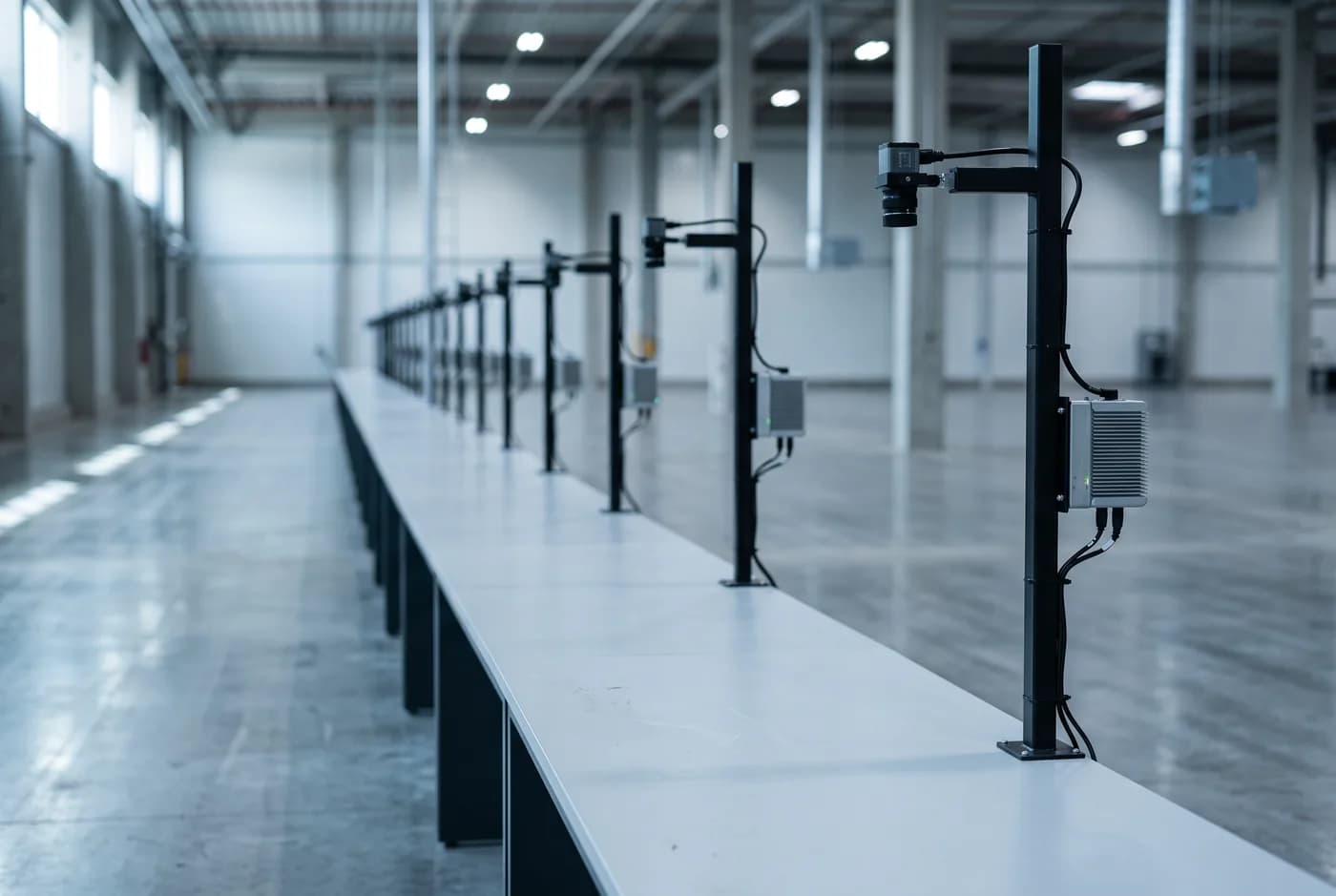
Project 01On-device AI
The client runs a network of camera stations across many locations. Each station had to recognize what happens in the frame in real time, and do it on site instead of sending video to the cloud.
Recognition runs on site with no delay and gets more accurate over time, and every station is managed from one screen.
How it works
The challenge
Recognition had to keep up with what happens in the frame, so it runs on the device with no waiting on a server.
Every site has its own conditions, and they change. Without retraining the model would drift, and labeling data by hand for every station is unrealistic.
The client needed to see the state of every station and update it remotely, without sending anyone on site.
What we built
Technologies
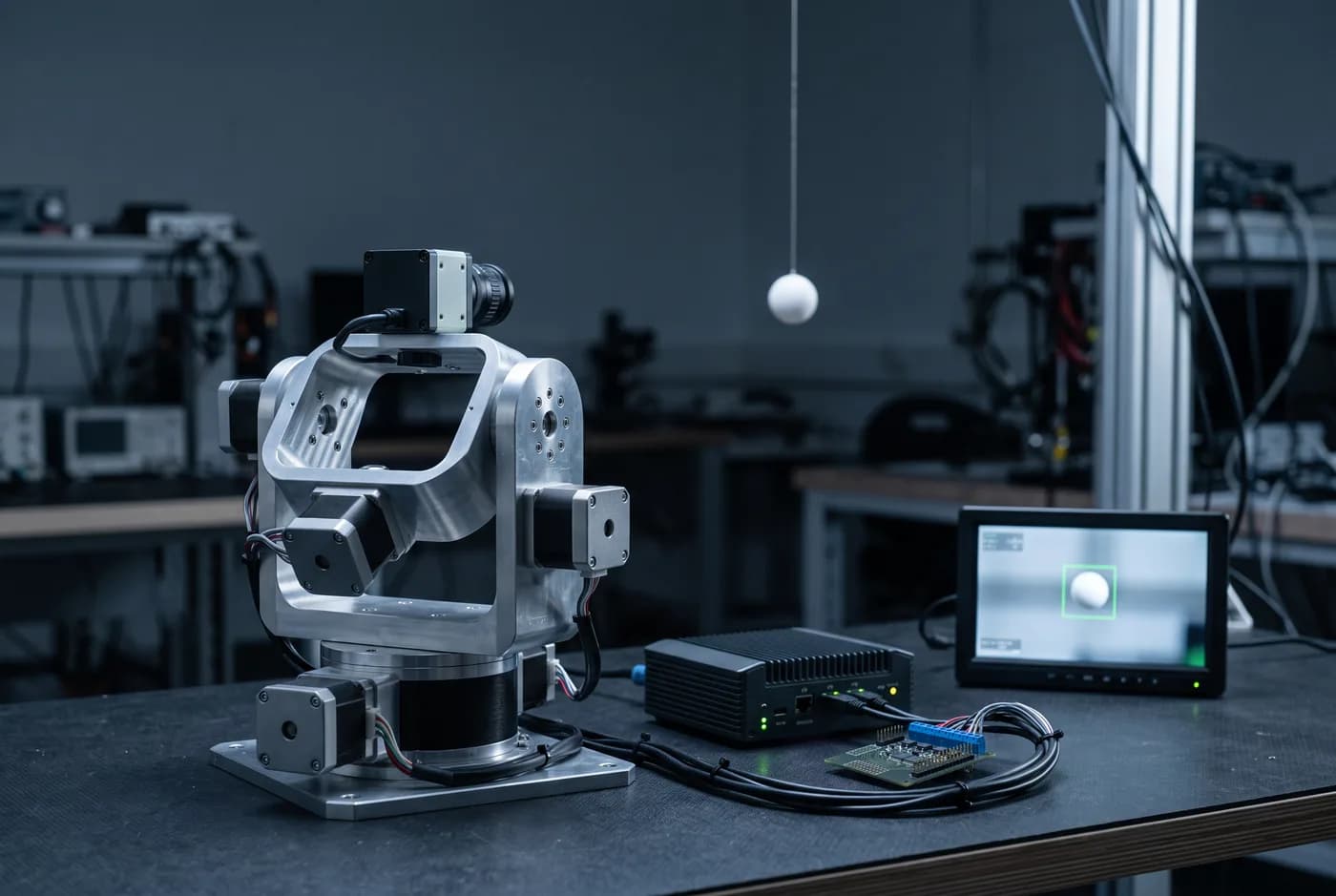
Project 02Motion control
The client had a heavy pan-tilt platform driven by several motors and controlled by hand from a console. The task: a camera finds an object on its own, and the platform turns after it and keeps it in the frame.
The platform is software-controlled and follows an object on its own in real time, and the equipment for the next stage was chosen by calculation, not by guesswork.
How it works
The challenge
The motors ran from separate pulse generators. Control had to move to a programmable controller without losing speed or smooth motion.
While the object moves, the system keeps turning its position in the frame into motor commands, or the platform lags and loses it.
A small object takes up only a few pixels. The camera, lens and frame rate had to be chosen to spot it early and keep it in view.
What we built
Technologies
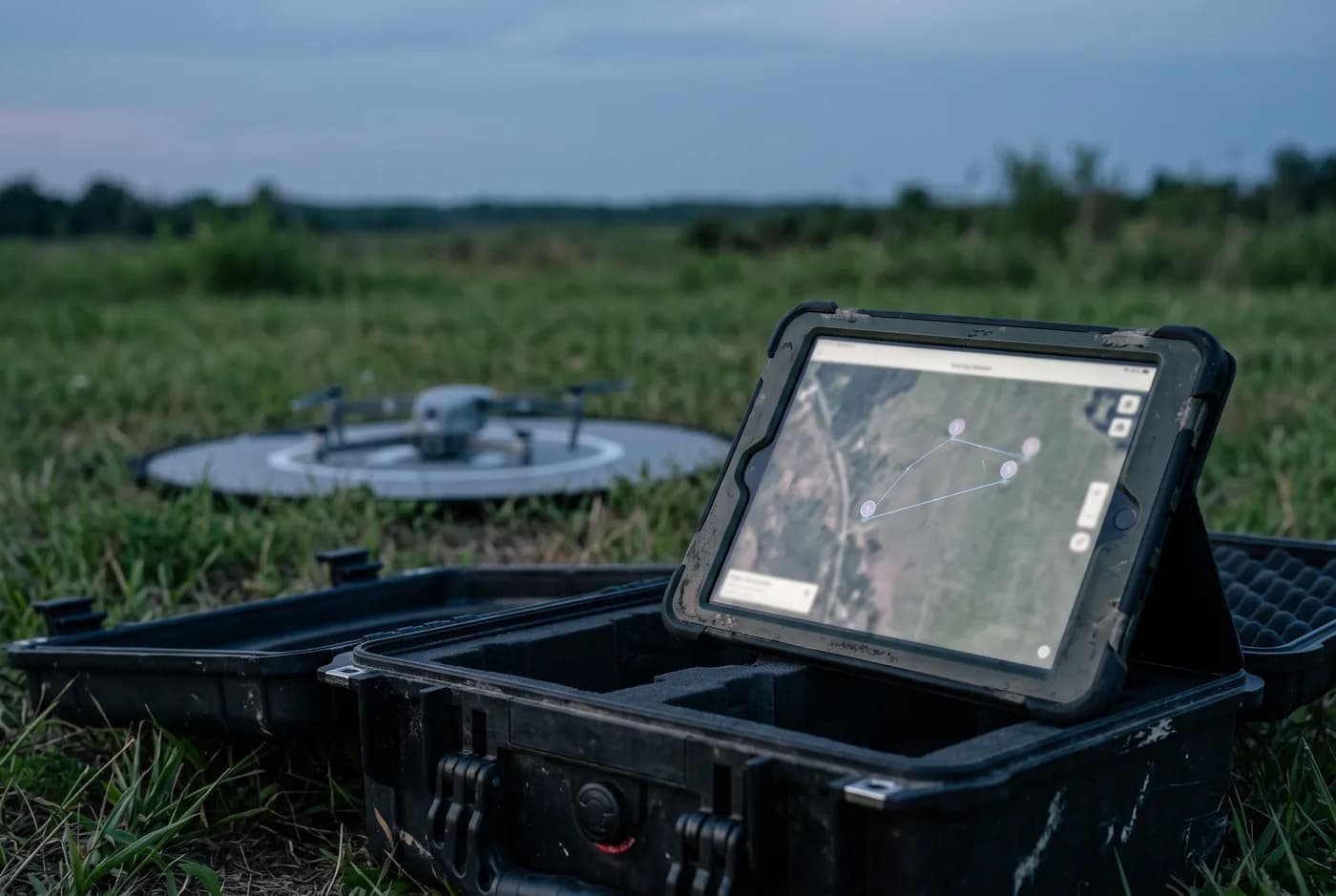
Project 03Autonomous flight
We took part in building a flight planning system. The operator sets up the whole flight in advance: where to fly, at what altitude, what to do at each point and how to return home. The drone then carries out the plan by itself.
The operator plans the whole flight in advance on a map, and the drone flies the route, does its tasks at each point and comes back home on its own.
How it works
The challenge
The mission is described before takeoff: the order of points, the altitude on each leg and what to do at each point, so the operator does not need to step in.
The plan had to be built simply and visually on a map, so the operator sees the whole route at once and can change it quickly.
However the mission goes, the drone has to come back to its starting point, so the return home is part of the plan from the start.
What we took part in
Technologies
Projects our engineers built before and outside DevsX. They are part of why difficult hardware does not scare us.
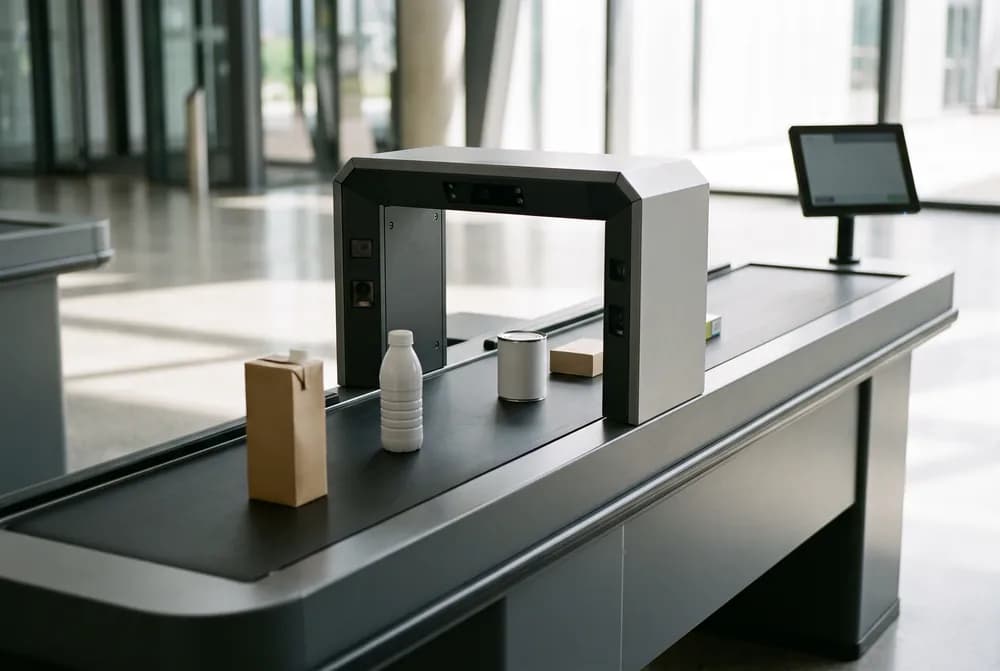
Since 2020
Around 2020, before today’s AI boom, the team built a working prototype: items ride through a tunnel together, cameras capture them, and the system recognizes and registers each one. The team collected and labeled the data and trained the models themselves.
Hardware and software
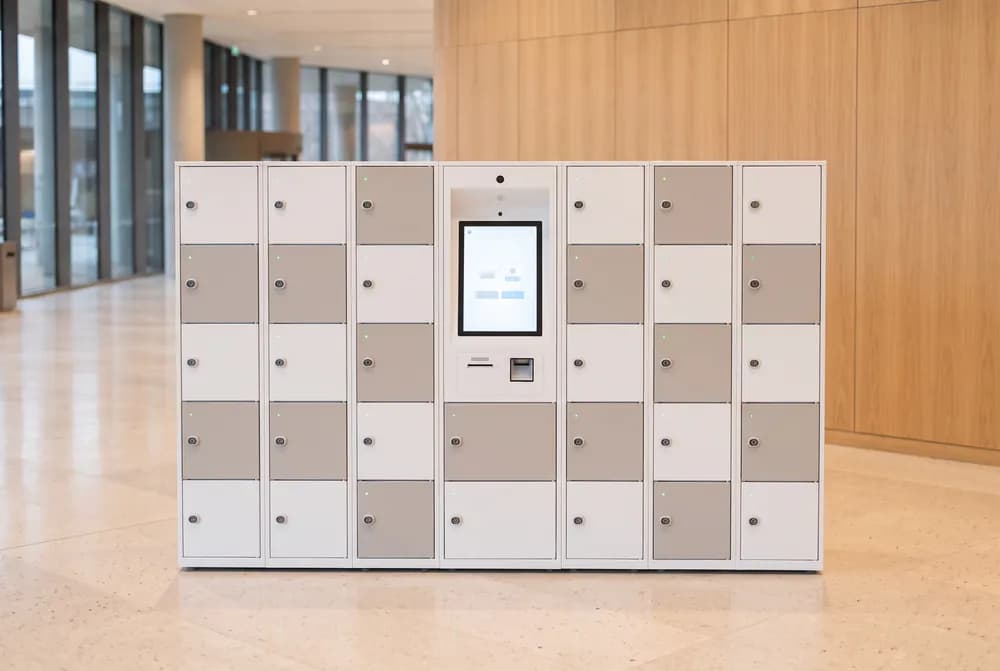
Fully electronic self-service terminals. The team assembled the hardware, wrote the touchscreen interface, kept a large number of electronic locks under reliable control and made ticket printers with locked-down firmware do what was needed.
Platform
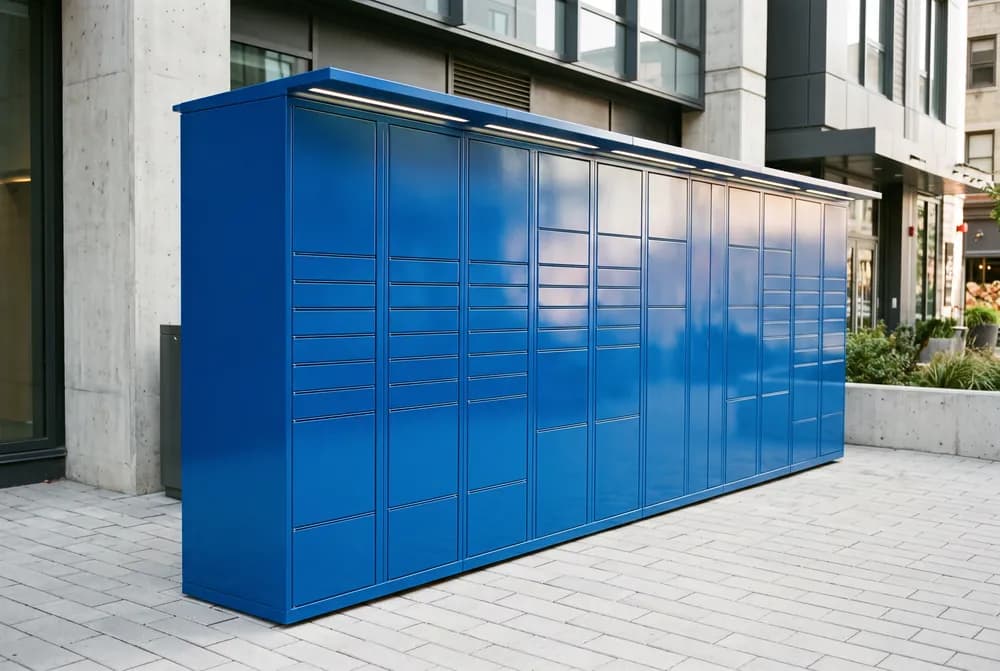
A separate product that grew out of the locker experience: a closed locker that delivery services control from their own mobile apps. Any new service connects through an integration, and an installation grows by adding racks as modules.
The tools we use, grouped by product layer: from the device itself to the app on a phone.
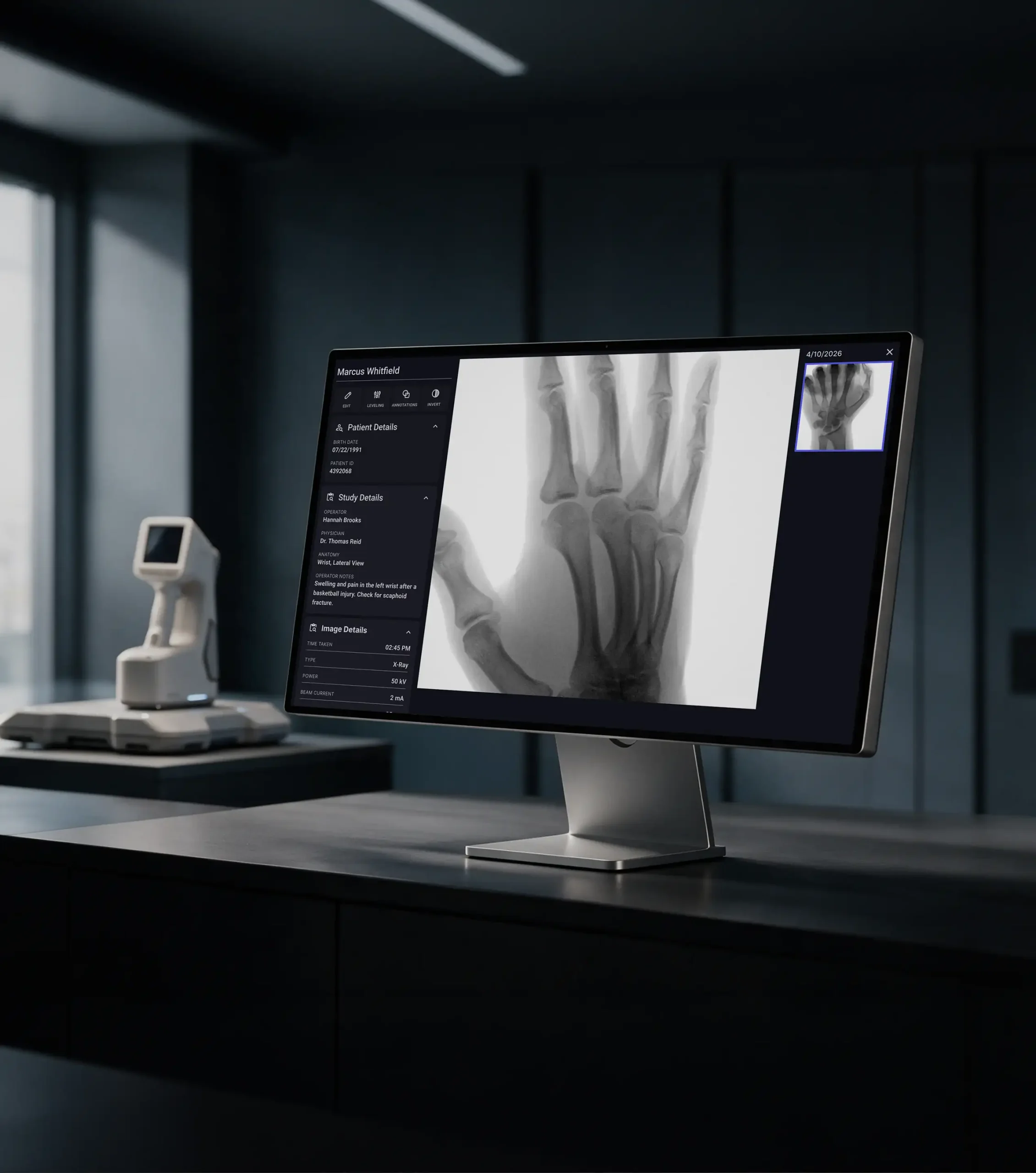
For medical devices we also work with the DICOM imaging standard and integration with electronic medical records (EMR).
Whether it’s an early concept, a prototype that works on a desk or a fleet that needs to get smarter, we’ll get back to you with ideas and a free estimate.
After each stage you see not a report but something you can try: a device that moves, a model that recognizes, an app that connects. You always know where the project stands.
We analyze your process, goals and constraints, assess technical feasibility and define the right hardware and software architecture.
You get: feasibility assessment, architecture concept, roadmap and estimate.
We build a first working version from off-the-shelf parts or on a software model of the device, and check the riskiest assumptions before full-scale development.
You get: a working proof of concept and validated assumptions.
We connect sensors, cameras, controllers, locks and other peripherals with the software, so every component talks to the rest reliably.
You get: an integrated hardware setup.
We write firmware and device logic, train computer vision models, and build the cloud, admin panel and companion apps.
You get: a complete product, from the device to the app.
We test software, integrations and AI models in the lab, on a test bench and in real conditions.
You get: a device that is proven to work outside the lab.
We handle rollout and monitoring, and update firmware, models and services remotely as your fleet grows.
Explore Support ServicesWhile the board is being made, we write the software and test it on a software model of the device. When the first units arrive, integration is already done.
A doubtful idea is first built from off-the-shelf parts to show that it works. You buy expensive production hardware only after that.
Firmware, models and services update remotely, so a device already in the field gets better over time instead of going out of date.
Products we can assemble from solutions that already work in our projects.
A camera over the line spots defects in real time, and the model retrains on new examples from that same line, making fewer mistakes over time.
Storage lockers, parcel lockers and pickup kiosks: devices with locks, printers and scanners that both your customers and your partners can control.
The device, its firmware, the phone link and the app as one product that can still be updated after it is sold.
Pan-tilt platforms and drives that find an object and follow it on their own, for filming, inspection and monitoring.
All the software around the device: images, secure storage, AI analysis, sharing between specialists and device management.
One place that shows the state of many devices across locations, and from which you can update them remotely.
These are examples of what can be built, not separate projects. Each one is made of solutions we have already delivered.
We are responsible for the whole path, from the first prototype to devices in your customers’ hands. You never have to glue together the work of several vendors.
Our engineers trained custom models for real-world systems before AI became fashionable. Today we build edge AI that retrains on real data by itself.
We have assembled terminals, tuned motor drives, controlled large numbers of locks and written firmware for custom boards, not just software for computers.
While the board is being made, we already write the software and test it on a software model, so the launch does not wait for the hardware.
You see the state and version of every device and update firmware, models and services remotely.
Most of our engineers are senior specialists who have built complex systems before and stay with the product after launch.
We build smart devices and connected hardware end to end: motion control and embedded software, computer vision and edge AI, hardware integration, device fleet management with remote updates, cloud platforms, admin panels and companion mobile apps. You can order the whole product or a single part.
Both. We can take the whole product from idea to devices in your customers’ hands, covering hardware, firmware, AI, cloud and apps, or join your team where it lacks people or experience.
Yes. We write the software and test it on a software model of the device, so when the first boards arrive, integration is already done.
Yes. We integrate computer vision and machine learning into existing cameras and devices for detection, recognition and object tracking, with recognition running on the device itself.
Over the air. Firmware, AI models and system services update remotely, and the admin panel shows the version and state of every device.
Not if retraining is built in. The system collects new examples from the field, labels them automatically and retrains the model, then rolls the new version out to your devices.
Yes. Our engineers have integrated lock controllers, printers with locked-down firmware and other equipment that came with little or no documentation.
Yes. Partners work through their own mobile apps while the device itself stays closed and secure. Adding a new partner is an integration, not a redesign of the system.
It depends on complexity and on how much hardware is involved. We usually start with a proof of concept to validate the riskiest assumptions before full development, and define the exact timeline after discovery.
Yes. We monitor the system, update it remotely, fix issues and keep developing the product as your fleet grows.